
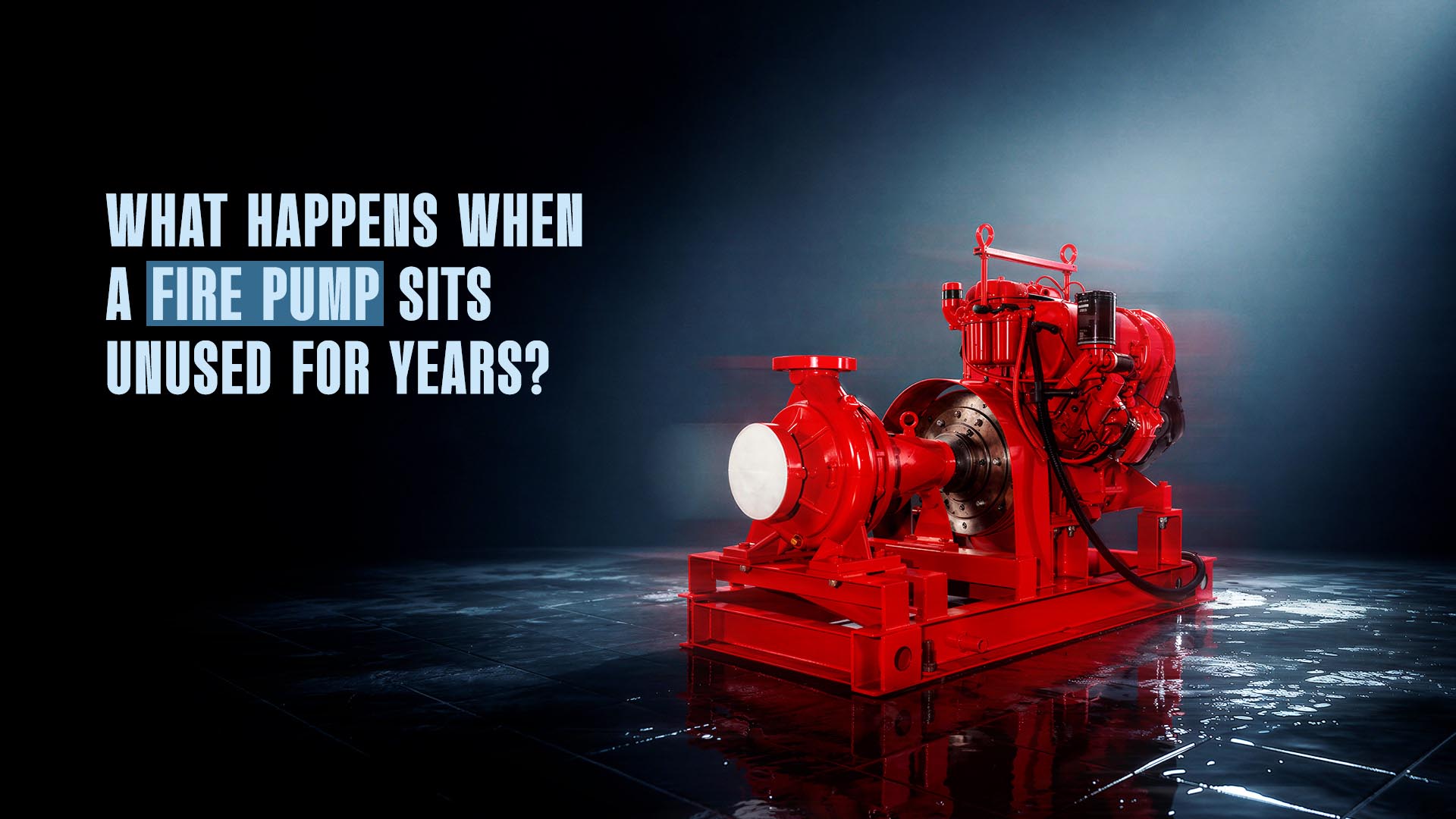
A fire pump can spend years waiting for the one situation nobody wants to happen: a fire emergency. But while the pump may not be running regularly, that does not mean its components remain untouched by time. Seals can harden, bearings can deteriorate, electrical connections can develop problems, and mechanical components can lose their reliability. The biggest risk is that these issues may remain invisible until the pump is suddenly needed.
This is why choosing a reliable pump and carrying out periodic testing are both critical for emergency preparedness.
For industries, commercial buildings, warehouses, and large facilities, working with experienced firefighting pump manufacturers in Ahmedabad can help ensure that the pumping system is designed for dependable long-term operation.
Your fire pump may be waiting. Is it still ready?
Does a Fire Pump Really Deteriorate If It Never Runs?
Yes.
A fire pump is designed to remain available for emergency use, but many of its components can deteriorate through age, environmental conditions, and lack of operation. Think of it like a machine that sits in a garage for years. You may not be putting mileage on it, but that doesn’t mean every component stays exactly as it was when new.
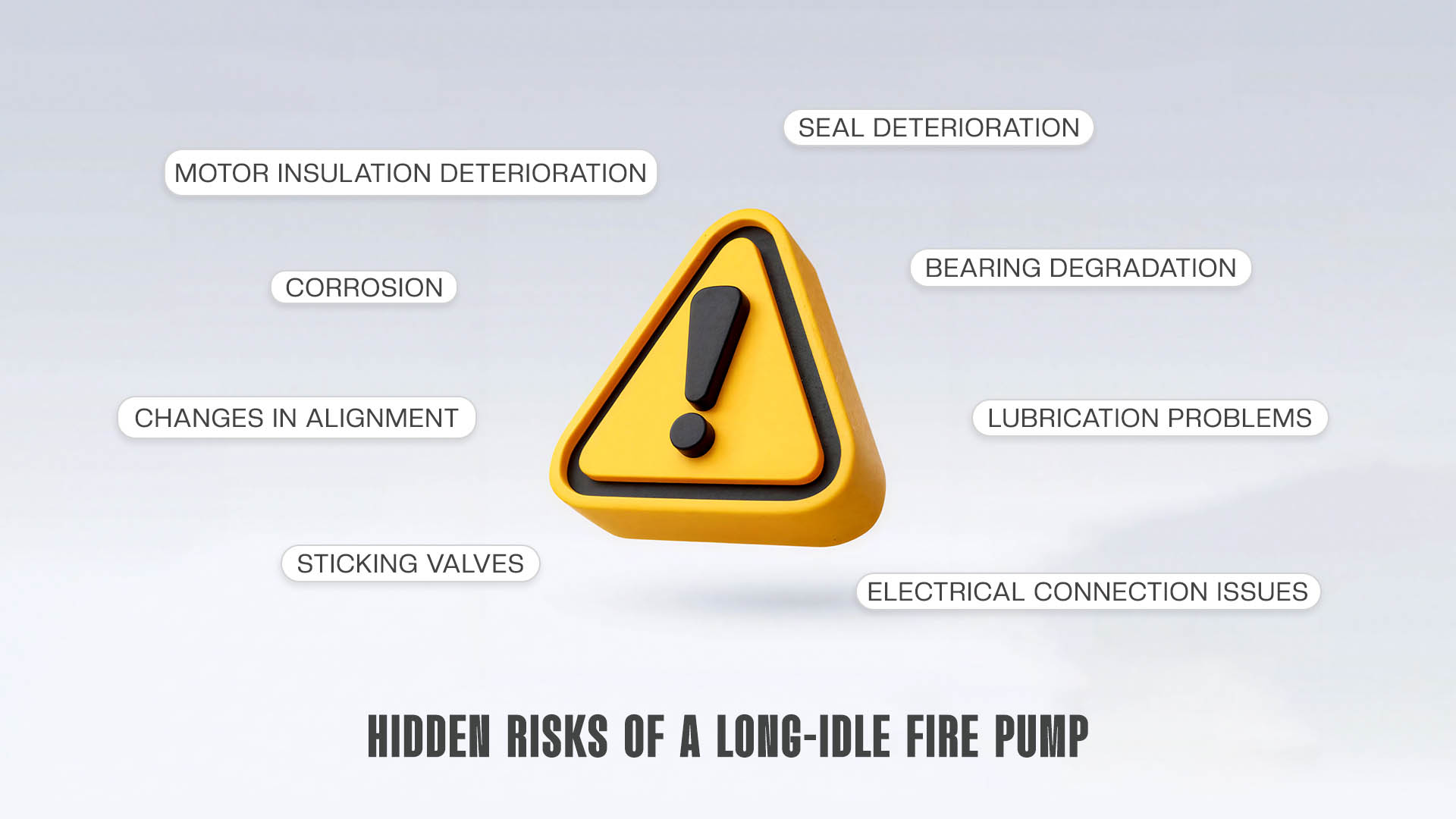
The danger is that many of these problems aren’t obvious during a simple visual inspection.
Seals Can Deteriorate Without Regular Operation
Seals play an important role in preventing unwanted leakage around rotating shafts and other connections. When equipment remains idle for long periods, seals can lose their flexibility or deteriorate depending on their material, temperature, and surrounding conditions. A seal that looks fine externally may still fail when the pump is finally started. This is one reason periodic operation and inspection are important. Testing doesn’t simply confirm that the motor starts; it provides an opportunity to identify problems before an emergency exposes them.
A fire emergency is the worst time to discover pump failure.
Bearings Don’t Stay Perfect Forever
Bearings support rotating components and help the pump operate smoothly. Extended periods of inactivity can create their own problems. Depending on the pump design, storage conditions, and lubrication system, bearings may experience lubrication-related issues, corrosion, or other forms of deterioration.
When the pump suddenly needs to operate at full capacity, a compromised bearing can contribute to:
- Excessive vibration
- Noise
- Heat generation
- Increased friction
- Mechanical failure
Regular inspection and testing can help identify unusual operating conditions before they become major failures.
Electrical Components Can Age While the Pump Is Standing Still
A fire pump system isn’t just about the pump itself. The motor, controller, wiring, terminals, and associated electrical components all need to function correctly when the system is called upon. Humidity, dust, heat, corrosion, and aging insulation can affect electrical reliability over time. Loose or deteriorated connections can also create problems that aren’t immediately visible
This is particularly important for facilities that depend on electrically driven fire pumps. Reliable motors and properly maintained electrical systems are essential to ensuring that the pump can start when required. This is where the expertise of industrial electric motor manufacturers and induction motor manufacturers in Ahmedabad becomes relevant when selecting equipment for demanding applications.
Valves Can Become a Hidden Weak Point
A pump may be perfectly capable of producing the required pressure, but that doesn’t help if water cannot reach the system correctly. Valves that remain in one position for extended periods can develop problems due to corrosion, deposits, or mechanical deterioration. A valve that doesn’t operate as intended can compromise the performance of the overall fire protection system. That’s why fire pump testing should look beyond simply switching the pump on.
It may sit idle for years. It still has to work in seconds.
What Happens When You Finally Start a Long-Idle Fire Pump?
This is where hidden problems become visible.
A pump that hasn’t operated for years may start normally, or it may reveal issues such as:
- Difficulty starting
- Unusual vibration
- Abnormal noise
- Water leakage
- Pressure problems
- Motor overheating
- Unstable operation
- Failure to reach expected performance
The problem isn’t necessarily that the pump was poorly designed. Even well-built equipment needs appropriate inspection, testing, and maintenance throughout its service life. A fire pump is an emergency asset, and emergency assets cannot be judged only by how they perform on the day they are needed.
Why Periodic Fire Pump Testing Matters
Periodic testing provides something extremely valuable: confidence before an emergency occurs. Testing can help confirm that the pump starts correctly, operates as expected, and is capable of delivering the required performance. More importantly, regular testing can expose gradual deterioration. For example, an unusual vibration today may be a warning of a mechanical issue that could become a serious failure months later. A small leak could indicate a deteriorating seal. An electrical irregularity could point toward a developing motor or connection problem. Finding these issues during a scheduled test is far better than discovering them during a fire. The exact testing and inspection schedule should follow the applicable fire-protection standards, local requirements, and the recommendations of the equipment manufacturer.
Don’t let years of standby become an emergency failure.
The Environment Matters Too
Where a fire pump is installed can have a major effect on how it ages. A pump located in a clean, dry, and properly ventilated environment may face very different conditions from those of one installed in a humid industrial area, dusty facility, or corrosive environment.
Factors such as:
- Temperature
- Humidity
- Dust
- Corrosive atmosphere
- Water quality
- Ventilation
- Storage conditions
Can influence component life.
This makes correct installation and environmental protection just as important as selecting the right pump. For industrial applications, experienced industrial pump manufacturers in Gujarat understand that equipment selection needs to consider not just initial performance but also the operating environment and expected service life.
A Fire Pump Should Be Selected for the Years It Will Spend Waiting
One of the most overlooked aspects of fire pump selection is that the equipment may spend far more time in standby mode than in actual emergency operation. That changes what “good performance” means. The right pump needs to be appropriately designed and manufactured so that its critical components can remain dependable over the expected service life.
Important considerations include:
- Correct pump capacity and pressure
- Motor suitability
- Quality of mechanical components
- Seal and bearing quality
- Controller reliability
- Appropriate materials
- Installation conditions
- Availability of maintenance support
- Compliance with applicable standards
In other words, don’t choose a fire pump only for the day it runs. Choose it for all the years it has to be ready.
When the alarm sounds, there’s no room for “let’s see if it works.”
Build Quality Matters When There Is No Second Chance
A fire pump may not run every day. But when a fire emergency occurs, there may be no opportunity to troubleshoot a failed bearing, replace a deteriorated seal, or investigate why the motor won’t start. That’s what makes fire protection equipment different from many ordinary industrial machines. Reliability isn’t just about performance during operation. It’s also about how confidently the equipment can move from years of standby to immediate service. Working with established firefighting pump manufacturers in Ahmedabad and reliable water pump manufacturers in Gujarat can help businesses select equipment suited to their application, operating environment, and long-term requirements.
Don’t Wait for a Fire to Test Your Fire Pump
A fire pump that has been sitting unused for years may look perfectly fine from the outside. Inside, however, time can affect seals, bearings, electrical components, valves, and other critical parts. The solution isn’t to run the pump unnecessarily or replace equipment simply because it has been idle. The smarter approach is to follow a proper inspection and testing program, address deterioration early, and select equipment from manufacturers that prioritize dependable construction and long-term performance.
Because the real test of a fire pump isn’t whether it runs during a routine demonstration. It’s whether it runs when everything depends on it.
Your fire pump gets one job when it matters most. Make sure it can do it.
